tognar

Tognar Toolworks
Tuning Tools & Wax


Ski & Snowboard Wax, Tuning & Maintenance Tools, Repair Supplies & D-I-Y Information

ski tools


We offer the largest selection of ski wax & snowboard wax, waxing tools, tuning tools, repair supplies and do-it-yourself information in the whole snowy world! We also have friendly folks on hand to answer your questions about ski & snowboard tuning, waxing, repair & maintenance.

tognarHow To Tune, Wax & Repair Database
Here's the largest database of ski & snowboard tuning, wax, repair & how-to information in the whole snowy world!
Product Catalog
wax kits
wax kits
wax kits
wax kits
wax kits
wax kits
wax kits
wax kits
wax kits
wax kits
wax books
wax books
wax books
wax books
wax books
wax books
tognar
tognarOrdering Details

Domestic & International shipping,
Return Policy etc.


tognarOrder Our Printed Catalog
Click here for our free 64-page ski
and snowboard tuning tool & wax
catalog

tognarContact Information

Email : info@tognar.com

Phone 1(800) 299-9904
fax: (541) 535-7776
International calls (541) 890-5627

Hours M-F 9-4 Pacific
(excepting epic conditions!)

Mail Tognar Toolworks
P.O. Box 1453
Phoenix, OR 97535
USA

Click here for shipping details

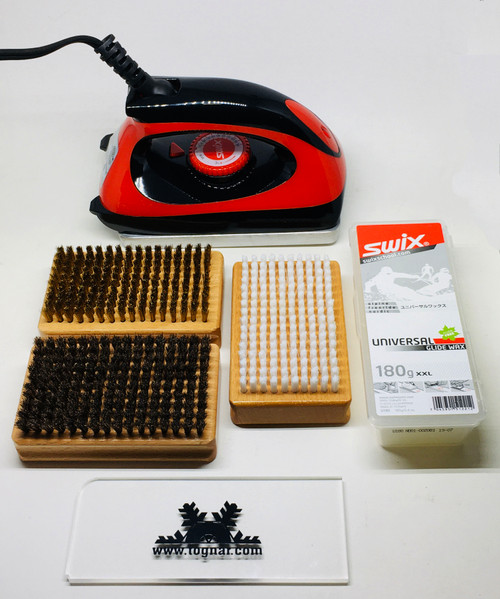
ski waxing kit HOT WAX KIT
Here's the basic goods you need to apply hot wax to your skis for easier turns, greater base durability, and smoother glide. It includes our trusty Chugger wax iron(115V), all-temperature universal wax (enough for about 6 applications), a plastic scraper and combo brush to remove excess wax from your base and structure after waxing. Offered at a special package price.

Item #TOG-WAX Hot Wax Kit:
Individually Priced $67.80
Package Deal $59.95
Quantity:

skuff TUFFSKIN SNOWBOARD BAG
If you're looking for good basic travel or storage protection for your snowboard, check out these economical but stout Tuffskin bags. They're made of a very durable, waterproof and textured PVC material, and feature shoulder straps, self-repairing zippers and handle. They hold one board (with bindings) up to 175cm long. They also fit in most car top racks.
Item #SWX-40797   Snowboard bag: Regularly $39.95 Sale! $28.95

Quantity:

super tubes SPORTUBES
Protect your snowboards from abusive baggage handlers and malevolent delivery dudes! Here's a hardshell container to transport snowboards when traveling, or for safe storage. They sport a pair of wheels at one end for easy rolling through airports; use a double-locking padlock to securely lock shut; have foam pads inside each end to cushion and protect both tips and tails; and strap to almost any car roof or luggage rack for ultimate protection from nasty winter road grit and grime. Measures 7.75" x 14.5" (interior size) to hold one snowboard up to 185cm long, or two boards up to 163cm long.

Item #HTC-SB   Snowboard Sportube:Regularly $149.95  SALE! $109.95
Quantity:


tognarRelated Ski & Snowboard Links
Tool & wax sites, instructional & technical sites,
equipment manufacturers, resort & travel sites,
avalanche & snow info sites, and other links from
around the snowy world for skiers and snowboarders

tognarToolaholics Reward $aves You Bucks

Earn discounts while supporting your ski and snowboard tuning & wax addiction 
tognarWin $300 in Wax & Tools!
Send us your favorite ski or snowboard tuning,
wax or repair tip...and you'll be automatically
entered in our annual contest
line

Why Wax Your Ski or Snowboard?
Back in the early days when all skis had wood bases, skiers had little choice but to wax 'em regularly if they wanted to slide on snow. But along with the introduction of polyethylene bases (p-tex) came the assumption that skis no longer needed waxing. Wrong...p-tex is a thirsty plastic that needs frequent wax feedings. In no time at all, the number of skiers who waxed their skis flip-flopped from 97% who did, to 97% who didn't. And that's pretty much where it remains today... amazingly, only 3-4% of skiers or snowboarders bother to wax their equipment. The performance these folks lose because of this misunderstanding is significant...a waxed base is about 30% easier to turn, more durable and faster than an unwaxed base.

Ski and snowboard bases can easily lose their ability to absorb wax efficiently. The most common cause is simply neglecting to wax regularly. The high friction of snow acts like sandpaper to abrade the ski or snowboard base, wear off wax and leave the p-tex dried out. Another cause is too much heat created by a poor stonegrinding, the use of excessive speed or pressure when rotobrushing, or, most commonly, from an improperly used or uncalibrated wax iron. About half the surface area of most sintered ski and snowboard racing bases will absorb wax when new...these are call "amorphous" regions. Excess heat converts these to "crystalline" regions, which do not absorb wax. Furthermore, heating the ski or snowboard base can increase its oxidation by atmospheric oxygen. Overheating a ski or snowboard base also dries it out and results in the creation of more unwanted, drag-inducing p-tex hairs.

You can help thwart most of these problems. When hot-waxing skis or snowboards, for example, use a decent wax iron that holds a fairly constant temperature (+ or - 8*F). Most household irons don't...they fluctuate wildly in temperature (in excess of 40*F). Secondly, calibrate your iron using one of the thermometers we offer. Third, apply enough wax to the ski or snowboard base so you have a nice molten layer of wax between the iron and p-tex. Don't let an iron come in direct contact with a dry ski or snowboard base. Remember, wax...even the pricey fluoro stuff...is cheap compared to a new pair of skis or snowboard!


Hydrocarbon Waxes

The foundation of most ski and snowboard wax today is paraffin...a hydrocarbon petroleum byproduct that boasts basic hydrophobic (water-repellent) properties. It penetrates deeper into ski and snowboard p-tex bases and lasts longest when melted in using a hot wax iron. Less effective but convenient alternatives are to apply a thin layer of bar wax (like a crayon), then vigorously rub it in with a wax cork...or use a liquid or paste formula (similar in texture to car or shoe polish) that you simply rub on, let dry, and buff off with a clean cloth. ALL-TEMPERATURE (UNIVERSAL) WAXES
For most skiers and snowboarders, the most basic and popular wax is a wide-temperature range universal wax. These are versatile, inexpensive, reliable and convenient for recreational riders, patrollers, guides, instructors and other skiers and snowboarders who commonly encounter a wide variety of snow and/or temperature conditions, and simply need such basic wax benefits as easier turning, decent glide and greater base durability...more than high speed. These ski and snowboard waxes are readily available in bar, paste or liquid form. All major wax companies offer universal hydrocarbon or fluorocarbon universal waxes. TEMPERATURE-SPECIFIC WAXES
These waxes serve as the foundation for greater performance and racing...and should be the first wax layer you apply to your skis or snowboard, preferably by hot-waxing. They are mixes of high-grade paraffins and other additives that offer greater speed in specific temperature ranges and snow conditions. Depending on your wax brand of choice (we recommend sticking with one initially to simplify matters), you can expect to find from three to five different temperature-range waxes offered by most wax companies, such as:

- Cold wax...for snow temperatures approximately 10*F/-12*C and below. This is a hard wax mix of paraffin and synthetic paraffins...hardening additives that make wax more durable, abrasion-resistant, and immune to scratching by sharp snow crystals (dry friction).

- Midrange wax...for snow temperatures between 10*F/-12*C and 28*F/-2*C. This is a medium wax formulated to counteract the effects of both moderate dry and wet friction.

- Warm wax...for snow temperatures 28*F/-2*C and above. This is a soft wax mix of paraffin and silicone (or similar)...hydrophobic additives that make wax more water-repellent to combat wet friction.

Fluorocarbon Waxes
Since their introduction in 1990, fluorocarbon waxes have proven indispensable at the racing level, where victories are increasingly determined by mere thousands of a second. Accordingly, more junior and master ski or snowboard racers have taken more interest in these pricey but prized speed potions.

WHAT ARE FLUOROS?
Unlike regular paraffin-based hydrocarbon waxes which are comprised of carbon molecules with neutrally-charged hydrogen atoms, fluorocarbon ski and snowboard waxes are comprised of carbon molecules with negatively-charged fluorine atoms. Somewhat like Teflon, they repel water better by reducing friction (capillary attraction) between bases and water in the snowpack, plus help keep bases cleaner and faster in dirty snow by repelling dirt particles (which, like the fluorine molecules, are negatively-charged). Fluorocarbon ski and snowboard waxes are offered in a variety of both universal and temperature-specific formulations that range from relatively inexpensive low-fluoro wax (1.5-3% concentration for low humidity snow), to mid-fluoro wax (3-5% concentration for mid-humidity snow), to high-fluoro wax (5-15% concentration for high-humidity snow), all the way up to expensive 100% fluoro overlays for top race speed applications. Low-fluoro wax is best suited for dry, low humidity conditions (when it’s hard to make a snowball), mid-fluoro wax is for medium humidity (when it’s easier to pack a snowball), and high-fluoro wax is for wet and high humidity (when it’s easy to pack a wet snowball). Different wax companies have varying but similar standards of humidity levels: Humidity      Swix        Toko    Dominator  Holmenkol
Low              0-50%       0-40%       0-25%       0-50%
Medium       50-65%     40-70%     25-65%     50-75%
High             65-100      70-100      65-100      75-100%


Since fluoro waxes are available in specific temperature ranges for skis and snowboards, you should always overlay them atop their hydrocarbon wax counterparts. Assuming that humidity levels warrant it (and your budget allows it...since fluoros become increasingly expensive), you should apply consecutive layers of increasing fluoro concentrations over your hydrocarbon wax...i.e.- apply low fluoro layer over hydrocarbon layer, then higher fluoro over the low fluoro layer, etc. Finally, a coat of low-fluoro paste wax applied to ski or snowboard sidewalls and tops can help improve glide when cranking ‘em up on edge for carving turns, as well as helping prevent unwanted snow buildup on topsheets.100% FLUOROCARBON OVERLAY WAXES
These 100% fluorocarbon overlays are offered in a variety of forms…including powders, blocks, liquids and pastes. A quick review of these top-end products can help you determine which are the most practical, safe, effective and economical to use. 100% FLUORO POWDERS
Powders were the first 100% fluoros to arrive on the ski and snowboard race scene. They require the greatest expertise to apply and are best applied indoors where wind won’t interfere. They’re sprinkled on and spread uniformly over the ski or snowboard base, then lightly tamped down using a hand cork, the palm of a clean hand, or with a heated iron. Then they’re melted into underlying wax layers (which, for best results, should include low, medium and/or high fluoro-concentrate waxes appropriate for your snow conditions) using either a hot wax iron or cork. Using an iron to melt in these overlays yields the greatest durability, but also requires very careful attention…especially since the temperature necessary to melt fluoro powders is hot enough to burn a ski or snowboard race base, as well as potentially create lung-damaging fumes. Although traditionally utilized by experienced technicians for maximum wax durability on long icy World Cup speed courses and nordic races 25K or longer, it’s an unnecessarily risky application for most juniors, masters, coaches or parents to attempt. A safer alternative is to use a hand or rotocork to rub and melt overlays into ski or snowboard bases. Using a hand cork powered by lotsa elbow grease...or an electric drill to spin a rotocork...they create heat via friction to melt fluoros into the base. Although they don’t generate temperatures as high as an iron to yield equally durable results, corks effectively bypass the safety and health concerns of ironing, while still providing the same fluoro speed benefits, which is ideal for juniors and masters who rarely race on courses as long, hard or abrasive as World Cup ski and snowboard competitors. Powders aren’t cheap. World Cup service techs use ¼ to ½ ounce on each pair of skis or snowboard, regardless if they iron or cork it in. At retail, this translates into $25-$60 per application…a hefty price for even top racers. 100% FLUORO BLOCKS
More recently, 100% fluoro blocks were introduced. These are 100% powders which are poured into a mold and compressed under extreme pressure (1000+ pounds). This process not only transforms them into solid form, but crunches fluoro particles into a smaller size which melts into bases at a lower temperature than powders. Fluoro blocks are applied to ski or snowboard bases by rubbing them on by hand like a crayon. A thin uniform layer is adequate to melt it in with a hand or rotocork, whereas a thicker layer is needed for ironing to avoid the risk of accidentally burning bases.For this reason, ironing in block overlays is advised only for long nordic races (25K or more) where maximum durability is required. Otherwise, hand or rotocorking is safer and equally effective for junior or master racers in all other events…and has likewise gained increased popularity on the World Cup, especially for technical alpine events. Corking in these fluoro blocks also allows for more convenient application for ski or snowboard racers, whether applied inside a waxroom or outside at the race start. Blocks are also less expensive than powders, costing about $10 per application when corking in a thin layer, or $20-30 when ironing in a thicker layer.100% FLUORO LIQUIDS & PASTES
100% fluoro liquids and pastes are the newest potions on the race hill. They are usually the fluid equivalent of powders or blocks, at least when offered by the same manufacturer (although there are exceptions to this, so check to make sure). They contain fluoro particles smaller than those used in powders or solids, which, combined with an evaporative solvent, allows them to permeate into underlying ski or snowboard base material and waxes without corking or ironing. They’re simply wiped on ski or snowboard bases and allowed sufficient time to dry thoroughly. This can take 5 minutes or more depending on weather/drying conditions, and is critical for good results. Although fluoro liquids and pastes can be applied directly onto base wax layers for economy’s sake, most World Cup techs apply them over fluoro powder or block applications…especially for very wet snow conditions…believing this improves their effectiveness and durability. The greatest advantage of fluoro liquids and pastes, however, is their ability to provide superior overall base coverage, since their fluidity lets them penetrate deeper into the recesses of aggressive ski and snowboard base structures where powders and blocks can’t always reach. There are numerous fluoro liquid and paste overlays on the market today, and their formulations, durability, and cost per application can vary from brand to brand. We’ve listed some of the most popular and proven products here, and suggest obtaining more detailed info about them at their respective websites. Parting notes…
Always consult the wax manufacturer’s recommendations before applying 100% fluoro overlays to ensure they’ll correctly match your race snow conditions…otherwise, you may actually end up spending lots, and getting less speed!Fluoro overlays can be applied to ski and snowboard bases the night before a race if you’re confident of race day snow conditions, or the morning of a race. You’ll want to do any ironing or powder applications indoors (preferably at room temperature), whereas fluoro blocks or liquids/pastes can be applied by corking or wiping them on nearly anytime or anywhere…even at the race start if weather and drying conditions allow.After applying powder or block fluoros by iron or cork, finish the job by making a light pass with a plastic wax scraper, rub the base with a felt pad, brush out any excess fluoros in the ski or snowboard base structure with a horsehair and/or fine nylon brush, polish again with a felt pad and give the base a final wipe using a clean lint-free paper or cloth. Liquid or paste applications can be finished by buffing ski and snowboard bases with a felt polishing pad, brushing with a fine nylon hand brush, and wiping the base with a lint-free paper towel or clean cloth.These steps remain essentially the same for all gear…snowboards, alpine and nordic race skis…since most all their race bases utilize similar quality p-tex.
PERSONAL TIPS FROM WORLD CUP TECHS FOR 100% FLUORO OVERLAYS
“Remove any remaining fluoro waxes or overlays from ski and snowboard steel edges after application, or they’ll feel slow in the snow.” –Pam Warman (former U.S. Ski Team/World Cup men’s alpine race service technician) “A synthetic cork distributes fluoro powder more uniformly over a ski or snowboard base than a natural cork…use it before heating powder in with an iron or rotocork.” -Ian Harvey (former member U.S. Nordic ski team, U.S. Olympic team, U.S. Biathlon team, and U.S. Nordic national champion; current Toko product manager and race service technician)“When hand or rotocorking powder, spray a light spritz of water on splotchy spots if they appear to help smooth them out and blend them into the base.” -Willi Wiltz (former K2 race service technician & DH alpine ski development; Canadian national team race service technician; Olympic/World Cup race service technician for Tommy Moe/Dynastar, Bode Miller/Fischer and Dahron Rahlves/Atomic)“Don’t rotobrush ski and snowboard bases at the race start…it can create more unwanted static friction which can increases drag.” -Randy Graves (former Rossignol U.S. Team & World Cup race service technician, junior program coordinator and alpine ski product manager; current Green Mountain Valley School teacher, coach and race service technician) “Heavy pressure rotocorking may dull steel edges, as the cork invariably touches them unless your ski or snowboard base bevel is unusually high…but this is not a problem on Nordic skis”. -Dave Peszek ( former Holmenkol brand manager and head World Cup alpine race service technician) “To keep them clean, store any corks, pads and brushes used for applying fluoro overlays a marked ziplock bag. This keeps them from getting “contaminated” by any other waxes or dirt, plus allows 100% fluoros to build up in them for handy touch-up applications on the hill.” -Steve Poulin (Swix national sales manager) “After racing, scour any remaining 100% fluoros from ski and snowboard bases by simply skiing them off, followed up with hot-scrape waxing when you return to the workshop.” -Randy Graves (former Rossignol U.S. Team & World Cup race service technician, junior program coordinator and alpine ski product manager; current Green Mountain Valley School teacher, coach and race service technician)

“Fluoros bond best to fluoros. For best race performance and durability, start with a ski or snowboard hydrocarbon base wax, then add at least one layer of fluoro base wax (low, medium and/or high fluoro) before applying 100% fluoro overlays.” -Tom Reinerth (former U.S. Pro ski racer; former Salomon North America race service technician; current Dominator Wax North American distributor and race service technician) “Avoid ironing in fluoros whenever possible to avoid accidentally burning ski or snowboard bases …I’m not a proponent of molesting race base material!” –Mike deSantis (former World Cup race service technician for Hillary Lindh & Volkl, cofounder/owner of www.precisiontuningcenter.com)“I use clean old lint-free diapers to give my ski and snowboard race bases a final polish and wipe!” -Randy Graves (former Rossignol U.S. Team & World Cup race service technician, junior program coordinator and alpine ski product manager; current Green Mountain Valley School teacher, coach and race service technician)
100% FLUORO OVERLAYS (listed by manufacturer for 2006/2007)
Dominator (www.dominatorwax.com)-Q Powder, Q6 or 65 Block, R6 Paste
Holmenkol (www.holmenkol.us)- PF Powder, Speedblock and Paste, Nanospeed Fluid
Swix (www.swixsport.com)- Cera F Powders, Blocks and Liquids
Toko (www.tokous.com)- Jetstream Powders, Jetstream Race Bloc, Helx Liquids
Raceservice 1- Speedline Fluoro Overlay

FLUOROCARBONS VS. FLAMES...BE ATTENTIVE
Many people associate fluorocarbon waxes with their highly toxic, reactive and ozone-eating cousins...chloro-fluorocarbons (CFC's). But the fluorocarbons used in ski and snowboard waxes do not belong in this category...in fact one of their primary characteristics is inertness, or very limited reaction to other materials and compounds. Analysis and tests done on Swix Cera F, for example, showed that when used as recommended, it will not react with human body tissue or fluids.

The melting point of these fluorocarbon waxes is higher than most hydrocarbon waxes, but about the same as hard synthetic paraffin waxes. Use an iron with a surface temperature of no higher than 300 F. (150 C.) to create a temperature in the wax layer of 250 F. (120 C.). Or avoid the use of an iron altogether and cork fluorocarbons directly into the ski or snowboard base. But beware of very high temperatures and open flames with any ski or snowboard fluorocarbon waxes, since they start to degrade at 570 F. (300 C.), and will decompose at 930 F. (500 C.). During degradation, toxic fumes (so-called Polymer smoke fever) is likely to occur, which can blister and sear the lungs. High temperatures will likewise melt down p-tex base material.

We recommend the following precautions: Do not heat fluorocarbon waxes or powders with an open flame or waxing torch, nor should people be waxing skis and snowboards in the same room with open flames. This includes space heaters, cigarette smoking, open fireplace, etc. Do not roll your own cigarettes or anything else if you are working with fluorocarbons, unless you've washed your hands real clean. Wear a respirator and always work in a ventilated room or tent, or even outdoors... waxing in a crowded room is never recommended if you can avoid it, since you never know how careful everyone else is with their waxing. This precaution can be applied to allski and snowboard waxes...hydrocarbon or fluorocarbon... since breathing any smoke is unhealthy.

line

Site Map

This page, and all contents, are Copyright (C) 2007 by Tognar Toolworks, Phoenix, OR, USA

Web management by
Kim Solga Artworks

Tool Index